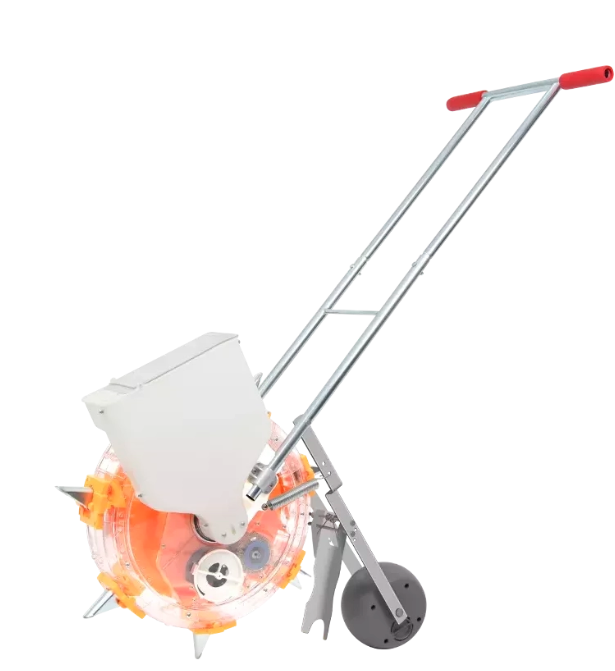
In the dynamic world of agriculture, efficiency and precision are paramount. As the global population continues to grow, the demand for food production has surged, placing immense pressure on farmers to maximize yields while minimizing labor. This is where the manual seeder comes into play, a versatile and indispensable tool that has revolutionized small-scale farming practices. Taizhou Haoding Import and Export Co., Ltd., a leading manufacturer of agricultural machinery, has been at the forefront of this innovation, offering a range of manual seeders that cater to diverse agricultural needs.
Understanding the Manual Seeder
A manual seeder is a compact, human-operated machine designed to simplify the traditional, labor-intensive process of sowing seeds. Unlike large-scale, motorized seeders, manual seeders are lightweight, portable, and ideal for small farms, gardens, and terraced fields. They are particularly beneficial in regions where mechanized farming is impractical due to terrain limitations or economic constraints.
The Evolution of Manual Seeders
Manual seeders have come a long way since their inception. Early versions were rudimentary, often consisting of a simple seed hopper attached to a wooden frame. However, with advancements in technology and a deeper understanding of agricultural needs, modern manual seeders have evolved to offer precision, efficiency, and versatility. Companies like Taizhou Haoding Import and Export Co., Ltd. have played a pivotal role in this transformation, integrating innovative features into their products.
Optimal Yield: The seeder’s innovative sowing mechanism ensures precise seed placement, promoting uniform seedling emergence and maximizing crop productivity.
Adjustable Depth and Rate: With a recommended sowing depth of 5-9 cm and a seeding rate ranging from 1 to 2 grains, farmers can achieve optimal planting outcomes tailored to their specific crop requirements.
Adaptable Seed Wheels
Versatility: Equipped with 25 seed wheels of varying sizes, the seeder can accommodate a wide array of crops, including corn, soybeans, peanuts, cotton, and more. This adaptability allows farmers to streamline their planting processes without compromising on crop diversity.
Streamlined Design
Efficiency: The seeder eliminates the need for manual bending and laborious planting tasks by facilitating direct seed injection into the soil. This not only speeds up the planting process but also reduces physical strain on the farmer.
User-Friendly Operation
Convenience: Designed to thrive in diverse terrains, from terraces to hillsides and intercropping areas, the seeder’s compact frame and convenient stand ensure stability during operation. Its user-friendly push design makes it effortless to traverse cultivated soil.
Time-Saving Features
Increased Productivity: The semi-automatic planter functionality eliminates the need for manual sowing, hole digging, transplanting, and soil filling. This saves valuable time and effort, especially in challenging soil conditions.
Technical Parameters of the 7A Semi-automatic Multi-functional Garden Hand Push Seeder
Parameter
Specification
Function
Planting
Nozzle Number
5-6-7 / 6-7-8-9-10 (adjustable)
Sowing Depth
4/6.5/8/9 cm
Sowing Quantity
1-3 (adjustable)
Seed Space
31cm - 26cm - 22cm (adjustable)
Seed/Fertilizer Box Capacity
4kg
Gross Weight/Net Weight
11.5kg/10.5kg
Packing Size
522657cm
Loading Capacity
20ft: 380 sets, 40HQ: 880 sets
The Role of Manual Seeders in Modern Agriculture
In an era dominated by large-scale, mechanized farming, the importance of manual seeders cannot be overstated. They offer a practical solution for small-scale farmers, gardeners, and hobbyists who require precision and efficiency without the high costs associated with heavy machinery.
Advantages of Manual Seeders
Cost-Effective: Manual seeders are significantly cheaper than their motorized counterparts, making them accessible to a broader range of farmers, especially in developing countries.
Ease of Use: Their lightweight and portable design allows for easy operation and transportation, even in challenging terrains.
Precision: Modern manual seeders offer adjustable sowing depth and rate, ensuring optimal planting conditions for various crops.
Versatility: With interchangeable seed wheels, a single seeder can be used for multiple crops, reducing the need for multiple machines.
Environmental Impact: Manual seeders are eco-friendly, as they do not rely on fossil fuels and have a minimal carbon footprint.
Applications of Manual Seeders
Manual seeders are suitable for a wide range of agricultural applications, including:
Small Farms: Ideal for farmers with limited land area who require precision and efficiency.
Gardening: Perfect for home gardeners looking to plant vegetables, herbs, and flowers.
Terraced Fields: Useful in regions with uneven terrain where large machinery cannot operate.
Intercropping: Allows for the simultaneous planting of multiple crops in the same field.
The Future of Manual Seeders
As technology continues to advance, manual seeders are likely to become even more sophisticated. Innovations such as GPS-guided sowing, smart seeders with real-time monitoring capabilities, and integration with mobile apps are on the horizon. These advancements will further enhance the precision and efficiency of manual seeders, making them an even more valuable tool for modern agriculture.
Trends and Innovations
Smart Seeders: The integration of IoT technology will enable seeders to collect and transmit data on soil conditions, seed placement, and growth progress. This information can be analyzed to optimize planting strategies and improve yields.
Eco-Friendly Materials: The use of sustainable materials in the construction of manual seeders will reduce their environmental impact and appeal to environmentally conscious consumers.
Customization: Future seeders will offer even greater customization options, allowing farmers to tailor their machines to specific crop requirements and field conditions.
Educational Tools: Manual seeders can also serve as educational tools, helping to teach the next generation of farmers about sustainable agriculture and modern farming techniques.
Frequently Asked Questions
What is a manual seeder?
A manual seeder is a compact, human-operated machine designed to simplify the traditional, labor-intensive process of sowing seeds. It is lightweight, portable, and ideal for small farms, gardens, and terraced fields. Manual seeders are particularly beneficial in regions where mechanized farming is impractical due to terrain limitations or economic constraints.
How does a manual seeder work?
A manual seeder typically consists of a seed hopper, a sowing mechanism, and adjustable components for seed spacing and depth. The user pushes the seeder along the field or garden, and the machine deposits seeds into the soil at a consistent rate and depth. Modern manual seeders, like those offered by Taizhou Haoding, often feature adjustable sowing depth, seed quantity, and spacing to accommodate various crops and field conditions.
What are the main advantages of using a manual seeder?
The main advantages of using a manual seeder include:
Cost-Effectiveness: Manual seeders are significantly cheaper than motorized seeders.
Ease of Use: They are lightweight and portable, making them easy to operate and transport.
Precision: Modern manual seeders offer adjustable sowing depth and rate, ensuring optimal planting conditions.
Versatility: Many manual seeders come with interchangeable seed wheels, allowing them to be used for multiple crops.
Environmental Impact: Manual seeders are eco-friendly, as they do not rely on fossil fuels.
How do I maintain a manual seeder?
To ensure the longevity and optimal performance of your manual seeder, follow these maintenance tips:
Clean the Seeder: Remove any dirt or debris after each use.
Lubricate Moving Parts: Apply a light coat of oil to moving parts to prevent rust and ensure smooth operation.
Store Properly: Keep the seeder in a dry, sheltered area when not in use.
Check for Wear: Regularly inspect the seed wheels and other components for wear and replace as needed.
Conclusion
The manual seeder is a vital tool in the modern agricultural landscape. It offers a cost-effective, efficient, and versatile solution for small-scale farmers, gardeners, and hobbyists. Companies like Taizhou Haoding Import and Export Co., Ltd. are leading the way in innovation, integrating advanced features into their products to enhance functionality and usability. As technology continues to evolve, manual seeders will remain a cornerstone of sustainable and efficient agriculture, ensuring that farmers can meet the growing demand for food production while minimizing labor and environmental impact.
In a world where agricultural efficiency is crucial, the manual seeder stands as a testament to human ingenuity and adaptability. It is a tool that not only simplifies the planting process but also empowers farmers to achieve greater yields with less effort. As we look to the future, the continued development and refinement of manual seeders will play a significant role in shaping the future of agriculture.
Taizhou Haoding Import and Export Co., Ltd. is situated in the picturesque coastal city of Taizhou, Zhejiang. We specialize in the production and trade of agricultural machinery.